
And yet.
Some thoughts on abundance and a writing prompt for paid subscribers

As I write this, I’m in the last days of August, that few weeks when my CSA box contains tomatoes alongside butternut squash, one season trying to let go and the next one waiting in the wings. I’m ready to move forward. The dust finally settled on 2025 enough for me to know up from down and feel a little more oriented, to know where my feet are.
Our full schedule began two weeks ago with all the extracurriculars in session after school, so I’m still getting used to the calendar I’ll follow for the next nine months. Mishaps abound (I dropped my daughter off at the ballet studio at 6 instead of 6:30 last week because every night has a different time, and I got confused). But the rhythm is establishing itself, and I’m finding a strange comfort in it even though it can be exhausting.
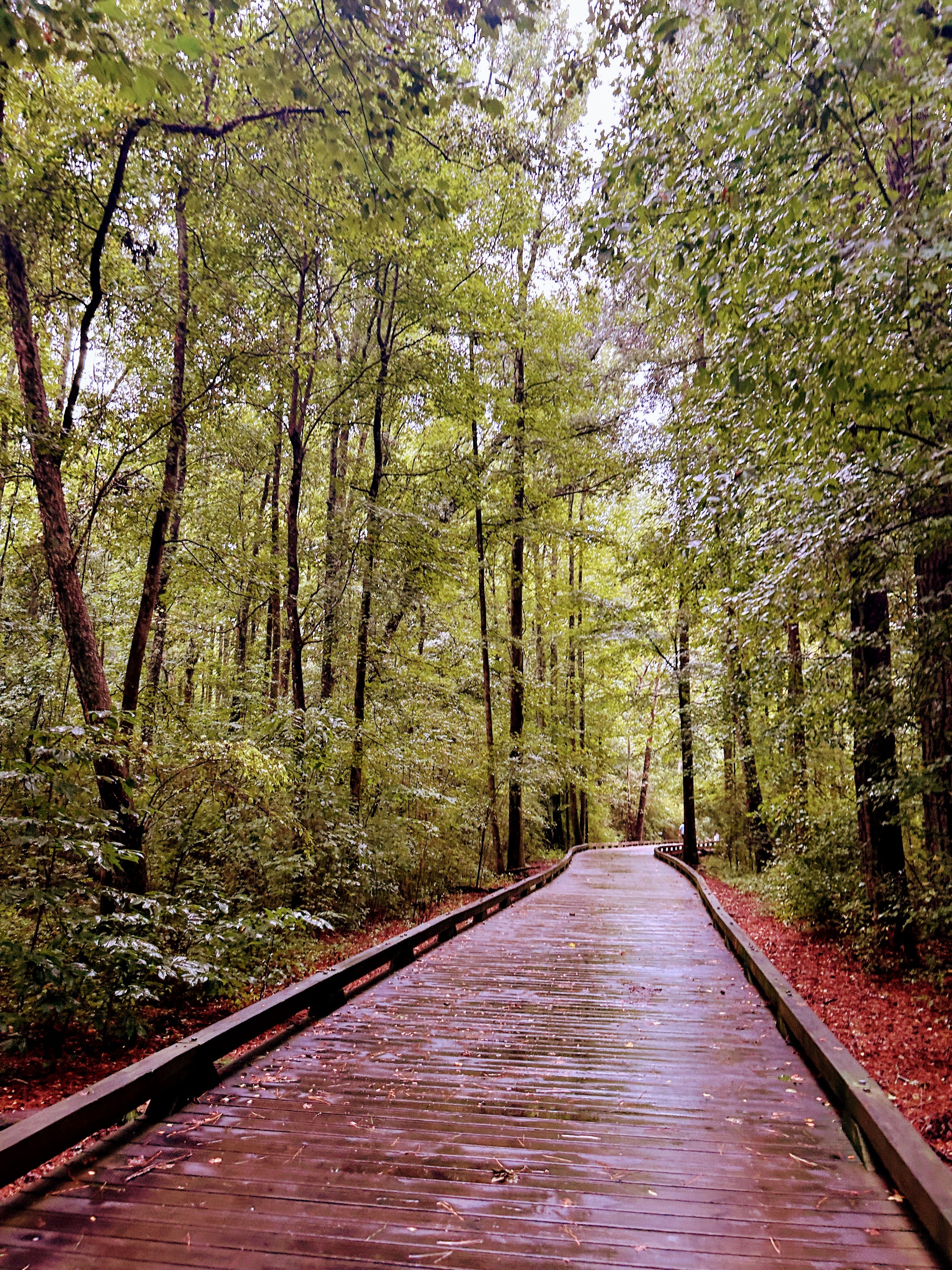
On Thursdays, I have an awkward 45 minutes between dropping one kid off and picking up another one, and instead of internally complaining about it or seeing it as “wasted time,” I realized I can spend it walking a shaded greenway with an audiobook rather than trying to go back home and then leave again just after. It feels like a mom hack (though I hate that word so much, there are no hacks) or more like a portal opened in my day when I found a doorway to another place. Thursdays are something to look forward to now instead of just another grind.
The word abundance is another word I don’t particularly love anymore since it’s been stolen by the manifestation crowd and seems only to apply to money lately. But abundance in the traditional sense of that word – plenty, bounty, treasure, more than enough – that’s what I’m thinking about today, what I want to write about here.
I lack so much these days, no time or money to spare, no brain cells left at the end of the day because they are all spent. But with a shift in perspective, I see bounty of a different sort. I read Robin Wall Kimmerer’s slim but wise book, The Serviceberry, a couple weeks ago, and her thoughts on abundance are helping to shift my view even further. Both things can be true at once: We can see a world that needs to change and recognize the million ways it’s unfair and broken, and we can also see the bounty of what’s in front of us and maybe loosen our fists a bit to share it.
When Kimmerer writes about the abundance of zucchini in a late summer garden and the simple act of a “take what you need” free farm stand to share it, I think about the lesson of garden abundance I observed my whole life. Watching my grandparents harvest their large garden, put up what they needed in glass canning jars or freezer quantities, and then share the rest with the simple act of giving it away just because they could. I can remember baskets full of tomatoes, green beans, bright yellow summer squash and corn, all offered to a neighbor or driven to a friend, delivered on a doorstep. Abundance is when we get more than we need, or at least more than we expected, and even in this moment when the whole world feels like not enough, I can still find abundant treasure. Shaded walks alone with a library-borrowed audiobook in my ears, tomatoes and butternut squash in my CSA box together at the same time, a wave from a neighbor who calls me by name as I walk the dog, a sunset that swallows the whole day with its gradient beauty.
The tension I’m thinking about lately is how this sense of abundance is not looking at the world with rose-colored glasses and maintaining the status quo we all know isn’t working, but it can instead be an act of resistance in its own way, a posture that refuses to be consumed by the world around us. Or as Kimmerer says, “Recognizing ‘enoughness’ is a radical act in an economy that is always urging us to consume more.” This is more than listing a gratitude journal to soothe our anxieties, it’s a whole way of being that recognizes the flow of the natural world and the reciprocity modeled there. It’s a way to imagine a path forward and build a more sustainable world. If I cannot change the whole world, I can at least make my own life more sustainable, my own days easier to walk through.
Do you notice how often someone tries to sell you something? A cream, a potion, a plan to fix whatever troubles you. Beneath that, I think maybe what’s really being sold to me is this idea that I need anything at all beyond what I already have, which I’m starting to see simply isn’t true. I’m looking for these gifts— like a shaded walk that grants me a brief portal outside of my overbooked day— and I’m realizing they are here more often than I realized and most of the time don’t cost a penny.
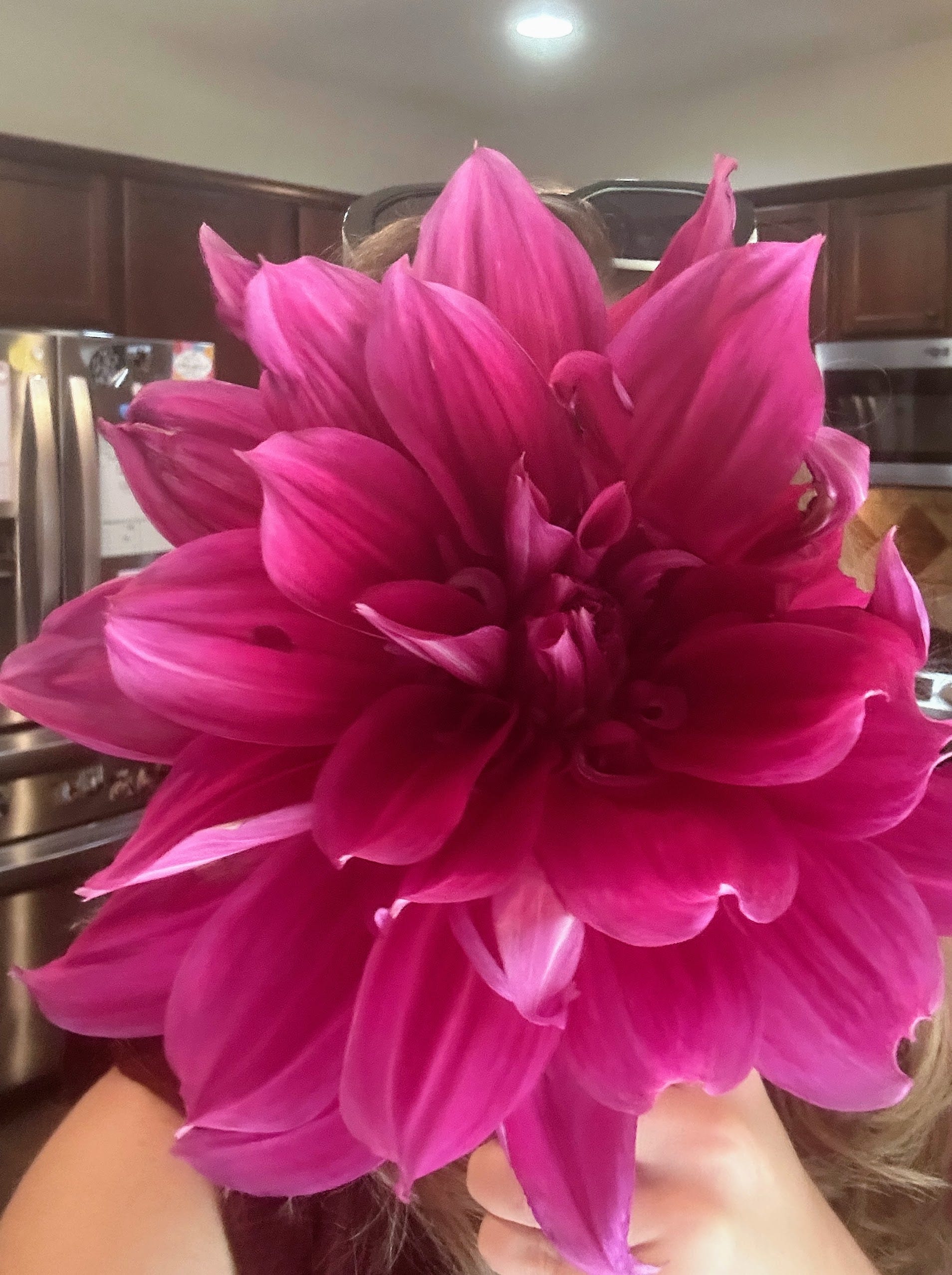
Late last spring, my beloved dahlia flower still hadn’t emerged, and I thought perhaps her time was done. I planted another bulb next to her old spot, a different variety this time. Then to my surprise, my original one emerged soon after and bloomed in late June and July as always. So now I have a late summer encore of a second one, covered in buds. The first bloom opened last week, and I could hardly believe what I saw. It is almost comically large, measuring the size of a dinner plate, and I jokingly texted a photo to someone with my entire face obscured, nothing but soft purple petals in my view. I still can’t believe it. It’s in a simple vase on my kitchen counter right now, and every morning I stare at it as I sip my coffee. That we get to live in the same world as a flower like this– it’s easy to forget beauty like that even exists. And honestly in today’s world, it feels miraculous to notice it, which I guess is my whole point in taking the time to write here today. I want to train my eyes to see it. I can’t wait to gift these miracles to other people in the coming weeks. (One only has room for so many massive blooms on the kitchen table!) They are made to share, an offering of outrageous abundance from one hand to another.
I’m not excusing the pain of the world. Yet another school shooting this week while America watches and does nothing. On Friday morning I found myself thinking again about my own classroom, the rubber door stoppers I bought and keep in a drawer at the advice of a teacher friend who heard that tip from a police officer, rehearsing scenarios of when I would take my class outside to escape and when we’d have to barricade the door and stay. I do this because the people who could enact any policy to change it don’t have to think about those logistics. They are safe where they work and have systems in place to protect them. They feel no need to change a thing because they are insulated and protected, and this is not their daily reality. In The Serviceberry, Kimmerer doesn’t excuse the world either. She says, “Let’s remember that the ‘System’ is led by individuals, by a relatively small number of people, who have names, with more money than God and certainly less compassion. They sit in boardrooms deciding to exploit fossil fuels for short-term gain while the world burns. They know the science, they know the consequences, but they proceed with ecocidal business as usual and do it anyway. [...] They’re all thieves, stealing our future, while we pass around the zucchini.”
All of that is true, and yet. And yet. And yet. I’m hoping to live in that space of bounty for the last stretch of the year if I can train myself to stay here, to see mostly this. Not as an act of ignorance and privilege but as one of resistance, an attempt to not be crushed by all the things that could crush me– the news cycles and the burdens placed on teachers and parents because we have a system intentionally created to thrive on the unpaid labor and sacrifice of people too tired to object. Maybe this can be my objection, my third door, my escape hatch. My days fill up with so many small tasks that leave me feeling like I didn’t do enough, but Kimmerer’s questions stick with me, “What if our metrics for well-being included birdsong, the crescendo of crickets on a summer evening, and neighbors calling to each other across the road?”
What are my metrics for well-being? A question I cannot answer yet, but maybe I’ll make it my mission to discern it in these months that remain in 2025. Noticing a bloom with the amazement it deserves, feeling warmth and comfort at the sound of someone’s voice across a telephone line, taking time for lunch outside under a blue sky with colleagues, filling our table with the simple foods we love. There are so many ways I’m tired and so many things about our world that that feel unsustainable and cruel and need to change. And yet.
